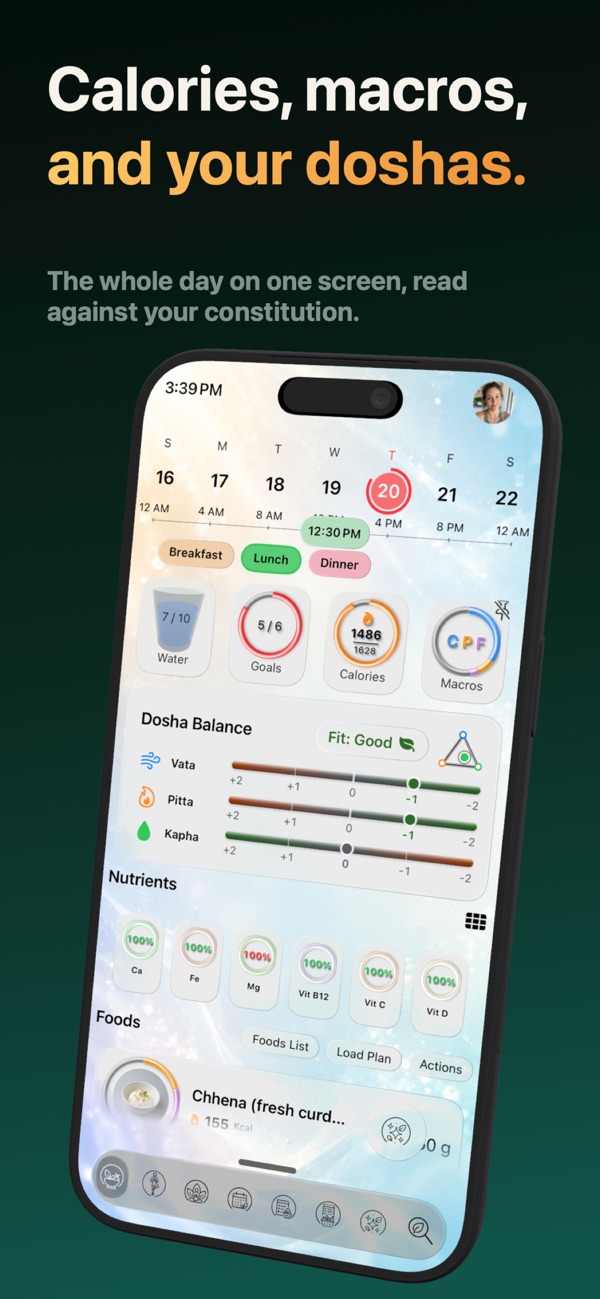
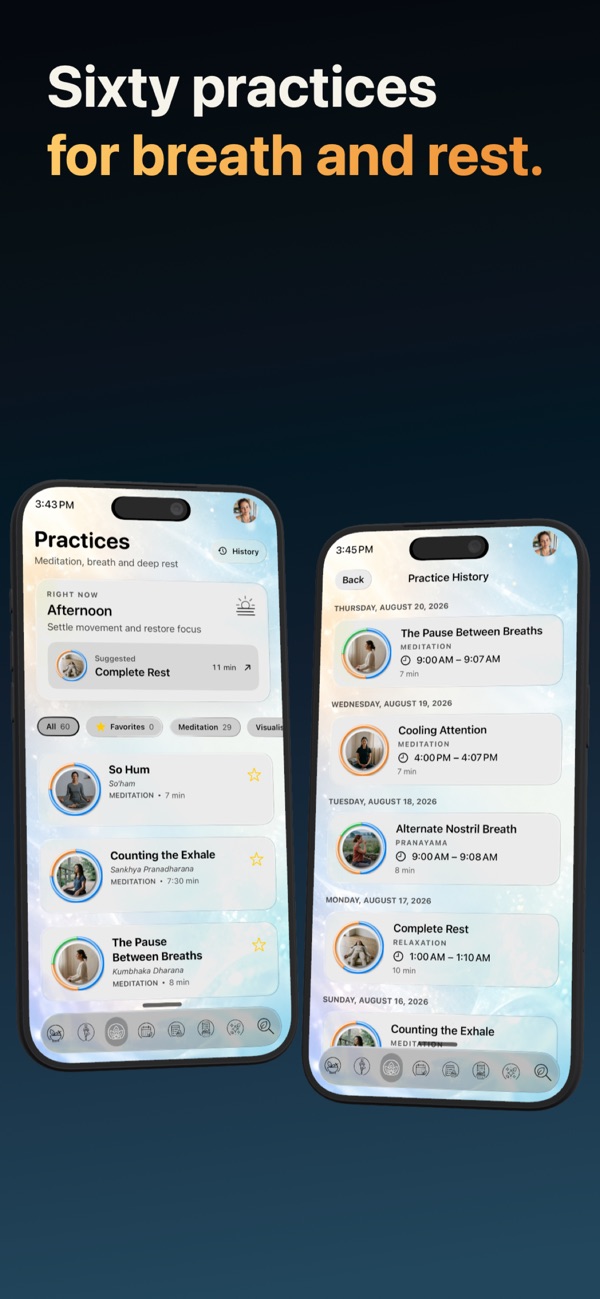
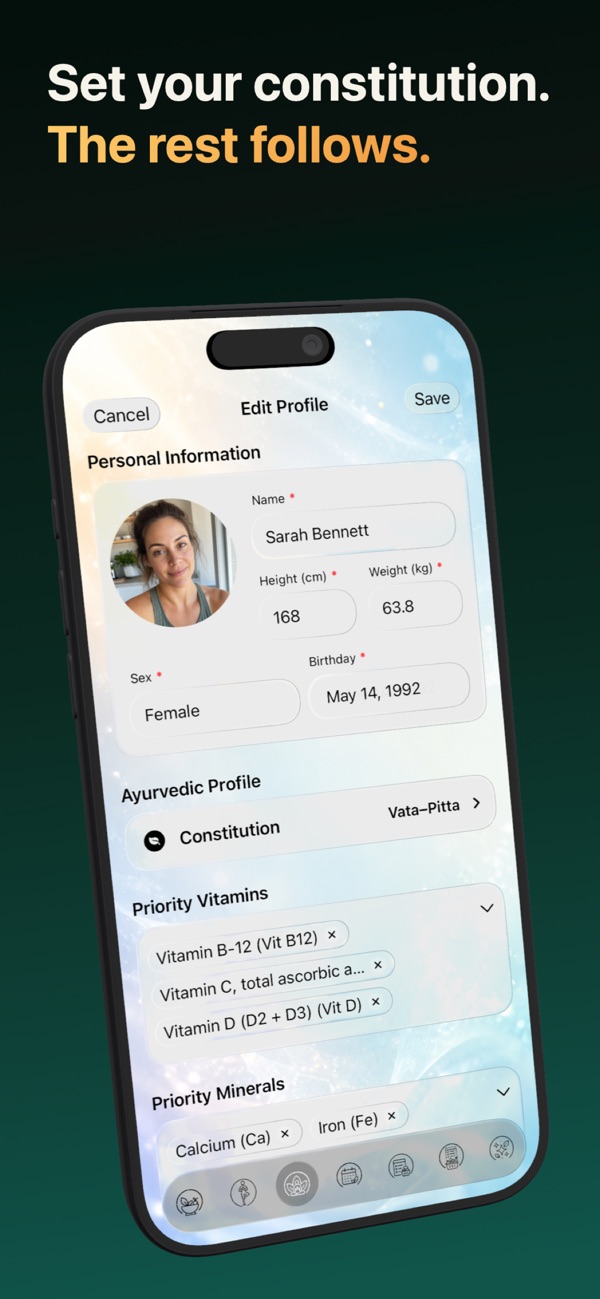
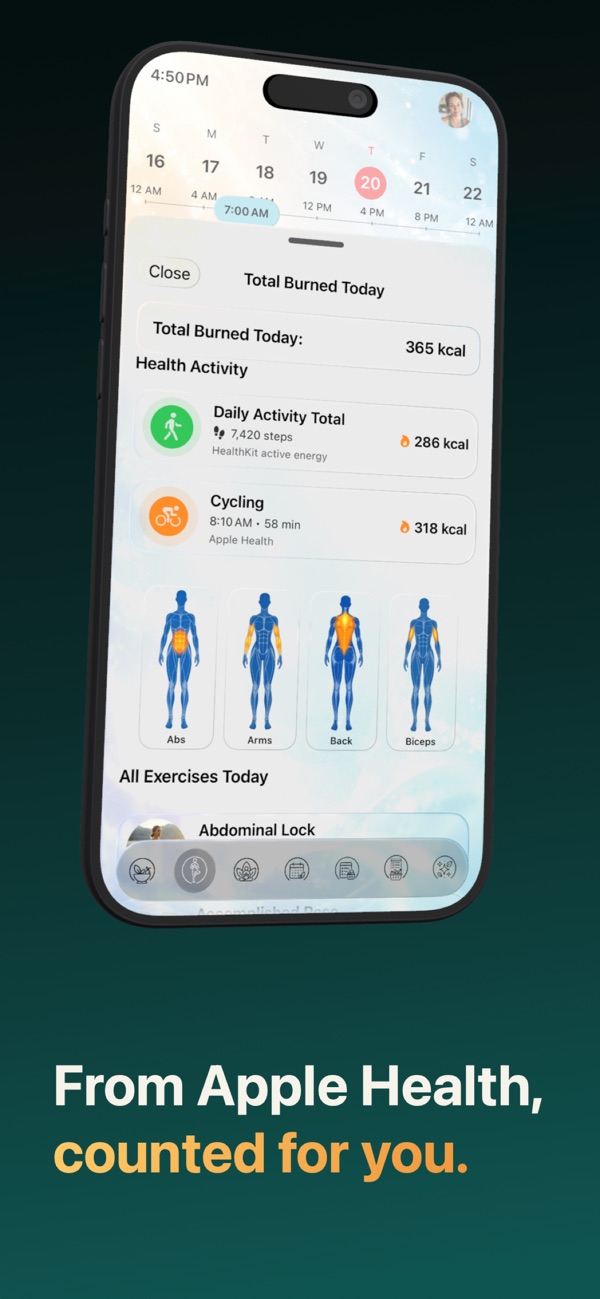
A meal and practice planner that pairs traditional Ayurvedic constitution (Prakriti) and seasonal rhythm (Ritucharya) with USDA-referenced nutrition, 850+ illustrated postures, and 60 guided practices that end in stillness rather than a leaderboard.
In classical Ayurveda, food and movement are explored as parts of one daily routine — organised around traditional qualities, seasonal rhythm, and transparent nutrition data.
Classical Ayurvedic literature uses traditional concepts such as agni (a cultural metaphor for digestive rhythm) and the six tastes (Shad Rasa) to organise everyday cooking across the day and the seasons.
Rather than treating yoga as a way to burn off meals afterward, the app lets you schedule posture, breathwork, and meals in their own unhurried windows — while USDA-referenced nutrient tables keep protein, fiber, vitamins, and minerals explicit at every meal. Traditional Ayurvedic descriptions are a cultural framework, not a clinical or physiological claim.
Prakriti · Constitutional Lens
Three classical constitutions. Explore how each one organises meals and movement.
Not a medical diagnosis. In classical tradition, Prakriti is a cultural lens describing baseline qualities and the culinary tastes and movement tempos traditionally paired with them.
Air · Ether
Vāta
Traditionally described as cool, dry, light, mobile
Classical culinary texts favour warm, moist, grounding meals and a steady daily cadence: well-cooked grains, split mung, root vegetables, and warming spices, paired with unhurried seated or supine postures.
Kitchen focus
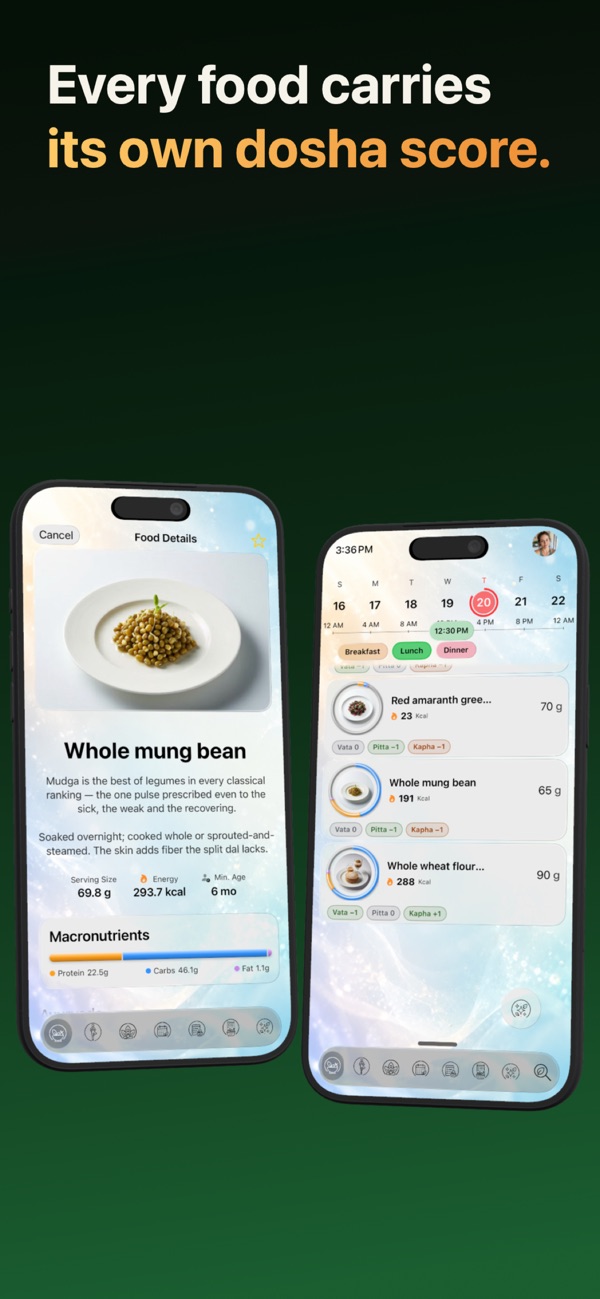
Whole Mung Bean & Red Amaranth Greens
Routine pairing
Siddhāsana & Seated Forward Folds
01
Fire · Water
Pitta
Traditionally described as warm, sharp, fluid
Traditional kitchen notes highlight sweet, bitter, and astringent ingredients: coriander, fennel, gourds, coconut, and leafy greens, paired with non-competitive seated routines and quiet breathwork.
Kitchen focus
Coriander, Fennel & Mung Bean Dishes
Routine pairing
Ardha Matsyendrāsana & Supported Rest
02
Earth · Water
Kapha
Traditionally described as heavy, slow, cool, steady
Traditional guidance leans toward lighter, warm, spiced preparations: barley, millet, spiced legumes, and leafy greens, paired with active morning standing postures.
Kitchen focus
Spiced Legumes & Bitter Greens
Routine pairing
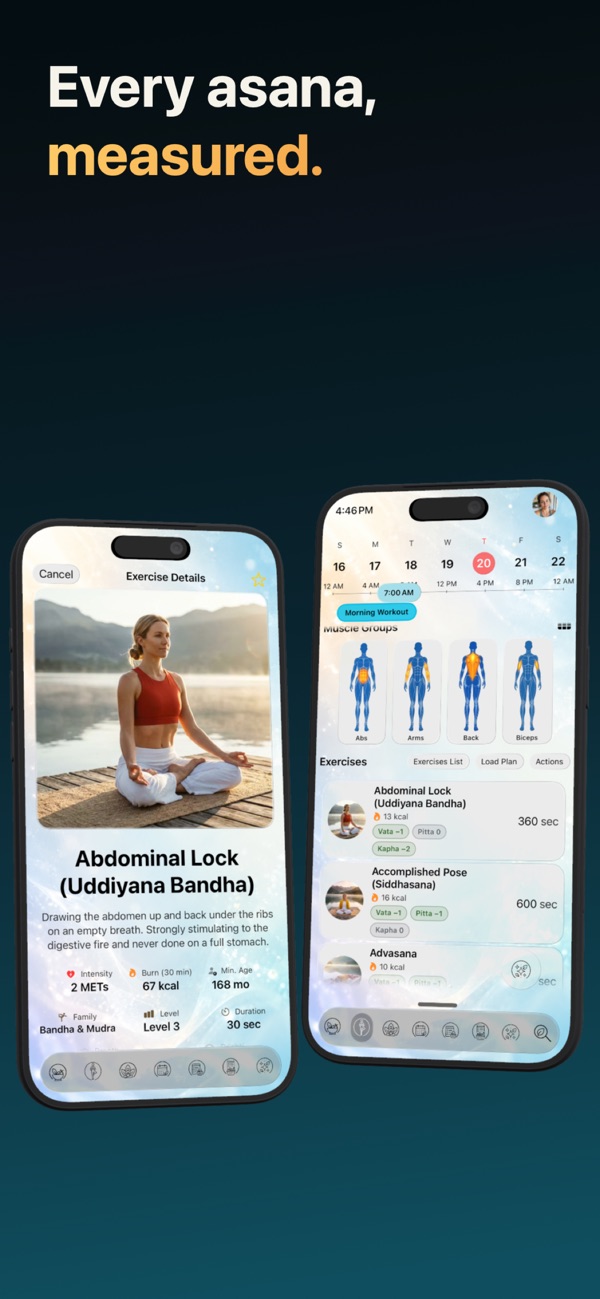
Uḍḍīyana Bandha & Standing Postures
03
The Posture Library
850+ postures, one visual language.
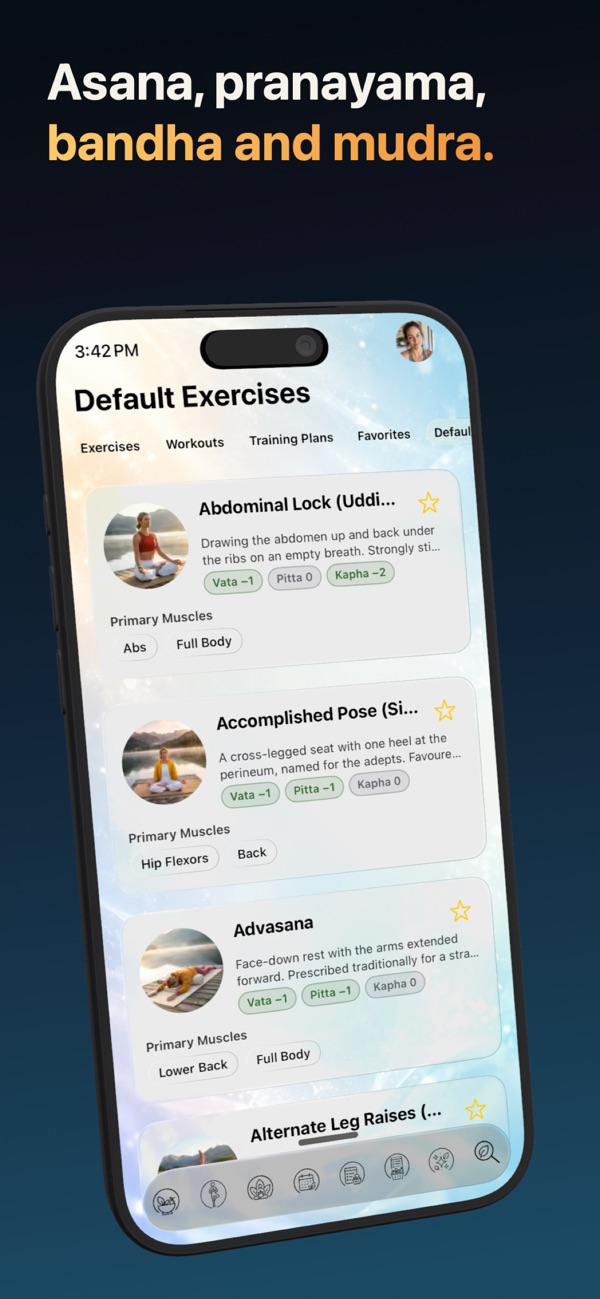
Browse over 850 postures across structural families and three difficulty levels — with Sanskrit and English names, primary muscle groups, breath and gaze cues, traditional dosha tags, and plain-language cautions.
Browse postures across structural families and three difficulty levels with primary muscle groups and traditional Vāta–Pitta–Kapha tags.
Classical Ayurvedic teaching organises daily habits into four time-of-day windows and six seasonal transitions — offering a traditional cultural structure for meal timing and practice pace.
06—10Kapha Window (Traditional)
Traditionally described as cool and steady. Begin with breath and morning movement; choose a light, warm breakfast if hungry.
10—14Pitta Window (Traditional)
In classical Dinacharya tradition, midday is the customary window for the day’s primary cooked meal.
14—18Vāta Window (Traditional)
Traditionally associated with mental activity and transition. Schedule afternoon rest, breathwork, or unhurried stretches.
18—22Evening Kapha (Traditional)
Stillness returns. Favour a modest, early cooked supper and leave comfortable time before sleep.
The same traditional lens extends across the year (Ritucharya): recipes and ingredients can be filtered by seasonal preference alongside your everyday nutrition targets.
Ayurvedic Food Qualities & USDA Nutrition
Traditional taste and potency, paired with transparent macros and micronutrients.
Traditional Ayurvedic classifications (Rasa, Virya, Vipaka, and Vāta–Pitta–Kapha tags) and modern nutritional analysis answer different questions. The app keeps both visible — and clearly separated — so you can inspect gram portions, calories, macros, and priority vitamins and minerals at every meal.
Inspect gram weights, calories, protein, carbohydrates, and fat alongside traditional Vāta, Pitta, and Kapha classifications.
Meditations, visualisations, prāṇāyāma breathwork, and deep rest sessions are assembled from discrete cues rather than shipped as fixed recordings. Choose the voice guidance, choose the ambient sound underneath it, or take the text alone at your own pace. Silence is a setting, not a missing feature.
60 guided practices across meditation, breathwork, visualisation, relaxation, and kriyā — playable with voice, ambient sound, or silence.
On your device
The planning happens on the phone.
The library, the illustrations and the reasoning ship inside the app. What you eat and how you practise is not a data product, and it is not something we need a copy of.
This app provides general wellness information drawn from classical Ayurvedic texts. It is not medical advice, and it does not diagnose, treat or cure any condition. Speak to a qualified clinician before changing your diet, starting a new practice, or acting on anything you read here.